6 Best Tax Solutions for SaaS Businesses: Full Guide

The best tax solution for SaaS businesses depends on three things: your billing stack, where you sell, and your revenue stage. SaaS tax solutions come in three very different models. They are tax engines, managed services, and merchant of record. Pick the wrong model and you could still be stuck with filing work you thought you had handed off.
Most SaaS teams don't shop for tax software out of curiosity. They shop because untaxed past sales showed up during a fundraise or an acquisition. (Not a fun surprise.)
This guide covers the four tax obligations a SaaS company faces, why indirect tax is the hard one, how six tools compare, and a decision tree to find your fit.
What Taxes Does a SaaS Business Actually Need to Manage?
A SaaS business needs to manage four mostly separate taxes: corporate income tax, payroll tax, indirect tax, and the R&D tax credit. Each one is handled by a different tool or provider.
- Corporate income tax is tax on your profit. You file it once a year at the federal level and, in the US, the state level. Accounting tools like QuickBooks and Xero, or outsourced accounting services like Pilot and Bench, keep the books and prepare the return. They don't calculate sales tax or VAT on each sale.
- Payroll tax is the withholding and employer-side tax on wages. Payroll platforms like Gusto, Rippling, and Justworks handle it as a byproduct of running payroll.
- Indirect tax is tax you charge your customers on each sale. In the US, it's sales tax. In most other countries, it's value-added tax (VAT) or goods and services tax (GST). You calculate and remit it in all the tax jurisdictions you sell into. Sphere handles this end to end across US sales tax, VAT, GST, input tax, and e-invoicing.
- The R&D tax credit is a benefit, not an obligation. Many SaaS companies underclaim it. Specialist providers like Neo.Tax, MainStreet, and Taxnova find your qualifying spend and prepare the claim.
This guide spends most of its time on indirect tax. It's the piece that gets harder for software as a service than for almost any other business. At Sphere, we regularly see SaaS companies outgrow QuickBooks' built-in sales tax handling long before they outgrow QuickBooks for bookkeeping.
Why SaaS Tax Gets Complicated as You Grow
SaaS tax gets complicated as you grow because every new customer, new hire, and new country can create a new tax obligation. Here are the triggers that catch SaaS companies most often.
Economic nexus. Since the Supreme Court decided South Dakota v. Wayfair in June 2018, states can require you to collect sales tax based on sales volume alone. No office or warehouse is needed. The most common economic nexus threshold is $100,000 in sales. Some states also count 200 transactions. California and Texas set theirs at $500,000. New York requires both $500,000 in sales and more than 100 transactions.
Physical nexus. A single remote employee creates physical nexus from day one. There is no revenue floor. It's easy to miss when your team is fully remote. Any other physical presence, such as an office or inventory in a warehouse also creates sales tax nexus.
Taxability. Approximately 26 US states tax SaaS at all as of 2026. Some split the rules by business use versus personal use. California starts taxing SaaS on January 1, 2027, after Governor Newsom signed SB 122 in June 2026.
Classification. Before you can even ask about tax rates, you have to classify your product. Is it true SaaS? Platform as a service? Hosting? A bundle of hardware and cloud-based software? That's often a judgment call, not a simple lookup. At Sphere, we see classification stall setup more often than the rate question does.
Unsettled law. Two compliant tax engines can land on different answers for the same product in the same state. One provider might treat a SaaS product as taxable in a state while another established provider treated it as exempt. Both positions can be defensible because the sales tax laws in that state are unsettled.
International sales. Selling abroad adds VAT and GST on top rather than sales tax. Many countries have no minimum threshold for foreign sellers of digital services. Your first sale can create a tax liability right away.
It's important to note that thresholds and taxability shift as your business grows, and that tax laws change constantly. SaaS sales tax needs ongoing monitoring. It is not a one-time setup.
How We Evaluated These SaaS Tax Solutions
We evaluated these SaaS tax solutions on six criteria:
- Compliance model (who is legally the seller)
- Scope of service (sales tax calculation, registration, filing, and remittance)
- Fit for subscription billing and usage-based billing
- Jurisdiction coverage
- Native integrations with your billing system, ERP, or ecommerce platforms
- Pricing transparency
We weighted the compliance model first. It decides whether you still own registrations and filings after you buy.
You'll likely see other names when you shop, like Avalara, Vertex, Anrok, TaxJar, TaxCloud, and Quaderno. We picked these six because together they show all three models–tax engine, managed service, and merchant of record–clearly.
Tax Engine vs. Managed Service vs. Merchant of Record
A tax engine calculates tax, a managed service does the compliance work for you, and a merchant of record becomes the legal seller. That one difference changes who carries the risk.
- Tax engine: Software calculates the tax rates on each sale. You remain legally responsible for registrations, filings, and remittance.
- Managed service: A provider's team owns your registrations, filings, and remittance. You stay the seller of record but hand off the work.
- Merchant of record: The provider becomes the legal reseller of your product and carries the tax obligation itself.
Solution | Compliance model | Scope of service | Jurisdiction coverage | Subscription & usage-based billing fit | Native integrations | Pricing model |
|---|---|---|---|---|---|---|
Sphere | Platform with compliance included. You stay seller of record. | Monitoring, registration, calculation, filing, remittance | 130+ jurisdictions across US sales tax, VAT, and GST | Strong. Connects to subscription and usage-based billing tools. | Stripe, Chargebee, Zuora, Orb, Maxio, PayPal, QuickBooks, Xero, NetSuite, plus API | Flat $100 per region per month (Starter). Custom for 10+ regions. |
Stripe Tax | Tax engine. Filing runs through partners. You stay seller of record. | Tax Basic: monitoring, calculation, collection. Tax Complete: adds registration and filing. | Collection in 100+ countries. Registration and filing in 90+ countries. | Strong inside Stripe Billing | Stripe Billing, Checkout, Invoicing, Payment Links, plus API | Tax Basic: 0.5% per transaction (no-code) or 50¢ per transaction (API). Tax Complete: from $90 per month on a 1-year contract. |
TaxValet | Managed service. You stay seller of record. | Nexus review, permits, filings, payments, state notices, audit defense | US sales tax only | Works with the billing system you already have | Connectors for Shopify, Amazon, eBay, Walmart, and more | Flat monthly rate by quote. Unlimited transactions. |
Sovos | Enterprise tax engine. You stay seller of record. | Tax determination, filing, e-invoicing, exemption certificates | US sales and use tax, VAT, and GST. E-invoicing in 65+ countries. | Runs through your ERP | SAP, Oracle, NetSuite, and other major ERPs | Custom quote |
Fonoa | API-first tax engine. You stay seller of record. | Tax ID validation, calculation, e-invoicing, returns | Tax engine in 190+ jurisdictions. Tax ID lookup in 120+ countries. E-invoicing in 50+ countries. | Built for high-volume digital platforms | API-first | Not published |
Paddle | Merchant of record. Paddle is the legal seller. | Checkout, payments, subscription billing, tax registration, filing, remittance | 100+ jurisdictions | Built in. You must use Paddle's billing. | Paddle checkout and billing, plus API | 5% + 50¢ per checkout transaction |
6 Best Tax Solutions for SaaS Businesses Worth Comparing
The six tax solutions worth comparing for SaaS businesses are Sphere, Stripe Tax, TaxValet, Sovos, Fonoa, and Paddle. Each one fits a different kind of company.
1. Sphere

Sphere is an AI-native indirect tax platform. It covers monitoring, registration, calculation, filing, and remittance in one system. Its engine, TRAM, reads and monitors tax law directly, so it doesn't depend on a hand-built tax matrix to stay current. A tax expert signs off before a determination goes live.
Best for: SaaS and digital businesses that sell in several US states, other countries, or both. Sphere also covers businesses that sell physical goods.
Compliance model: Platform with compliance included. You stay the seller of record. Sphere does the registrations, filings, and remittance.
Coverage: 130+ jurisdictions. That includes US sales tax down to the state and local level, plus VAT and GST worldwide.
Subscription billing handling: Sphere connects to subscription and usage-based billing tools like Stripe, Chargebee, Zuora, Orb, and Maxio. Each SaaS subscription invoice gets the right tax treatment.
Nexus monitoring: Real-time. Sphere tracks your sales against economic nexus thresholds and alerts you before you cross one.
Integrations: Stripe, Chargebee, QuickBooks, Xero, NetSuite, and more, plus an API.
B2B exemption certificates: Exemption certificate management and VAT ID verification are built in.
Pricing: A flat $100 per region per month on the Starter plan (fewer than 10 regions). Growth plans for 10 or more regions are custom. There are no implementation fees.
Limitations: Sphere covers indirect tax only. It isn't a merchant of record, so you stay the legal seller. Input tax recovery and e-invoicing are add-ons.
2. Stripe Tax
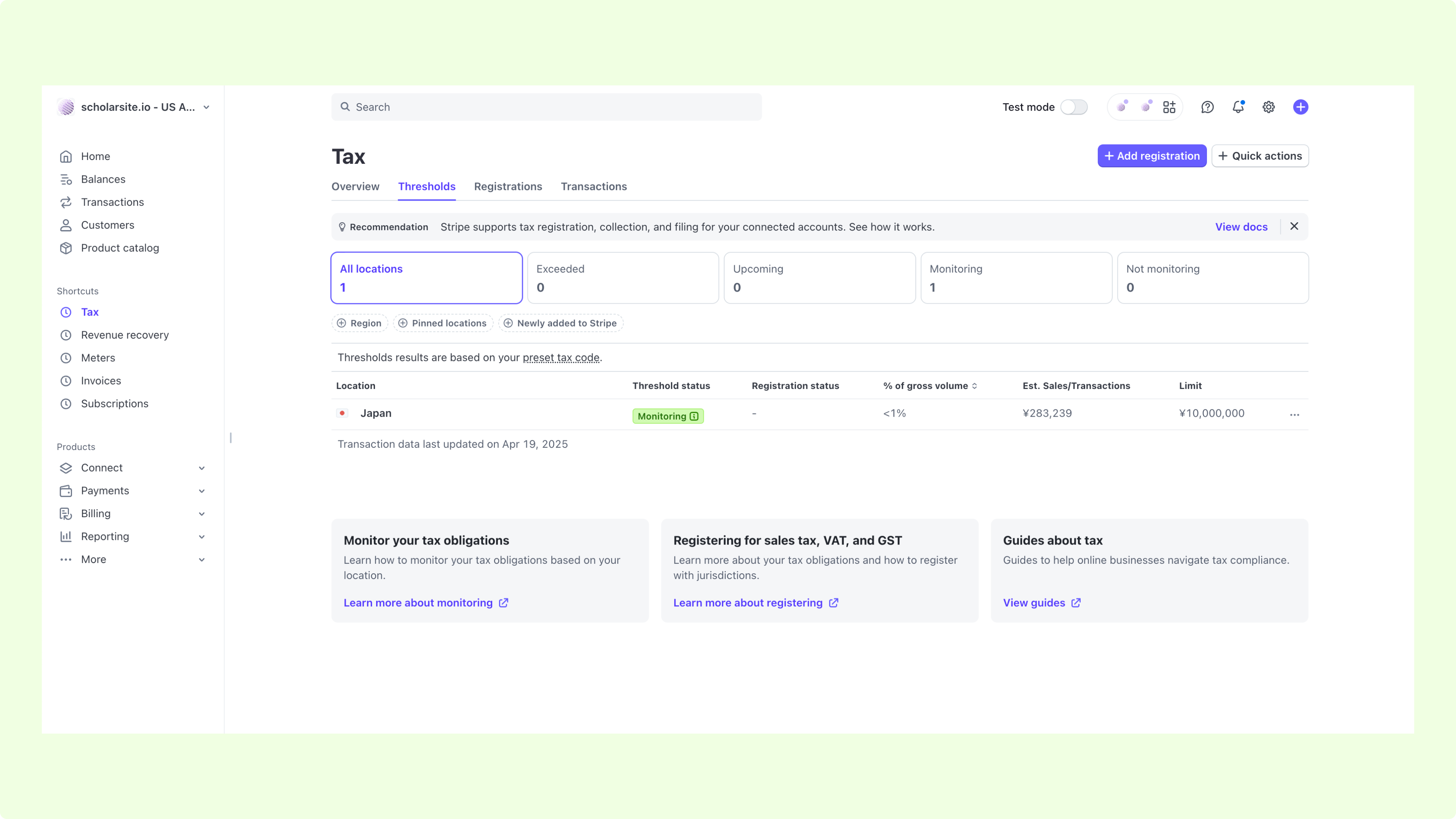
Stripe Tax is a tax engine built into Stripe. It calculates and collects sales tax, VAT, and GST on your Stripe payments.
Best for: Companies already on Stripe with simple plans.
Compliance model: Tax engine. You stay the seller of record. On the Tax Complete plan, registrations and filings run through partners. US filing uses TaxJar. Other countries use Taxually.
Coverage: Tax collection in 100+ countries. Registrations and filings in 90+ countries on Tax Complete.
Subscription billing handling: Strong if you use Stripe Billing.
Nexus monitoring: Included on both plans. Stripe alerts you when you reach a threshold.
Integrations: Stripe Billing, Checkout, Invoicing, and Payment Links with no code. An API covers other setups.
B2B exemption certificates: You can mark customers as exempt. Stripe validates tax ID formats and supports the reverse charge.
Pricing: Tax Basic costs 0.5% per transaction with no-code tools, or 50¢ per transaction through the API. Tax Complete starts at $90 per month on a 1-year contract.
Limitations: Tax Basic only calculates and collects. Tax Complete caps the registrations and filings in each tier, and extra fees can apply outside the US. It works best when all your billing lives in Stripe. For other payment platforms, you’ll need other tools.
3. TaxValet
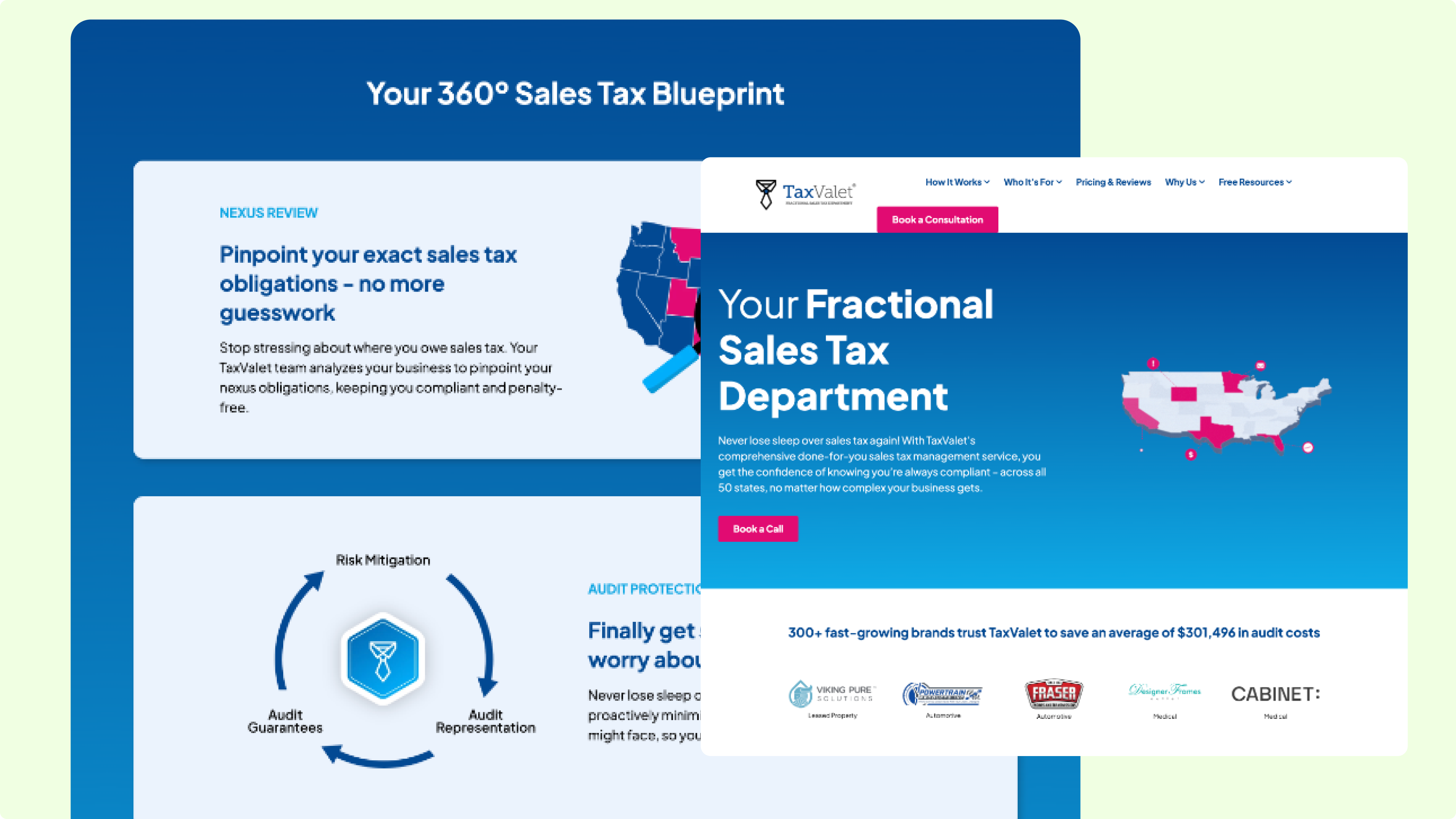
TaxValet is a managed service that calls itself a fractional sales tax department. A dedicated team takes over your US sales tax compliance. That includes sales tax permits, filings, state notices, and audit support.
Best for: US-focused companies with no internal tax owner.
Compliance model: Managed service. You stay the seller of record.
Coverage: US sales tax only.
Subscription billing handling: TaxValet doesn't replace your billing system. Its team sets up the tools you already use so they collect the right tax.
Nexus monitoring: Done by people. The team runs a nexus review during onboarding and keeps watching your exposure.
Integrations: Connectors for Shopify, Amazon, eBay, Walmart, and more.
B2B exemption certificates: Not listed in their marketing materials. Ask during your consultation.
Pricing: A flat monthly rate, quoted for your business. Transactions are unlimited, and the first 60 days are risk-free.
Limitations: There is no VAT or GST coverage. It isn't a real-time calculation engine. You rely on a service team instead of self-serve software.
4. Sovos
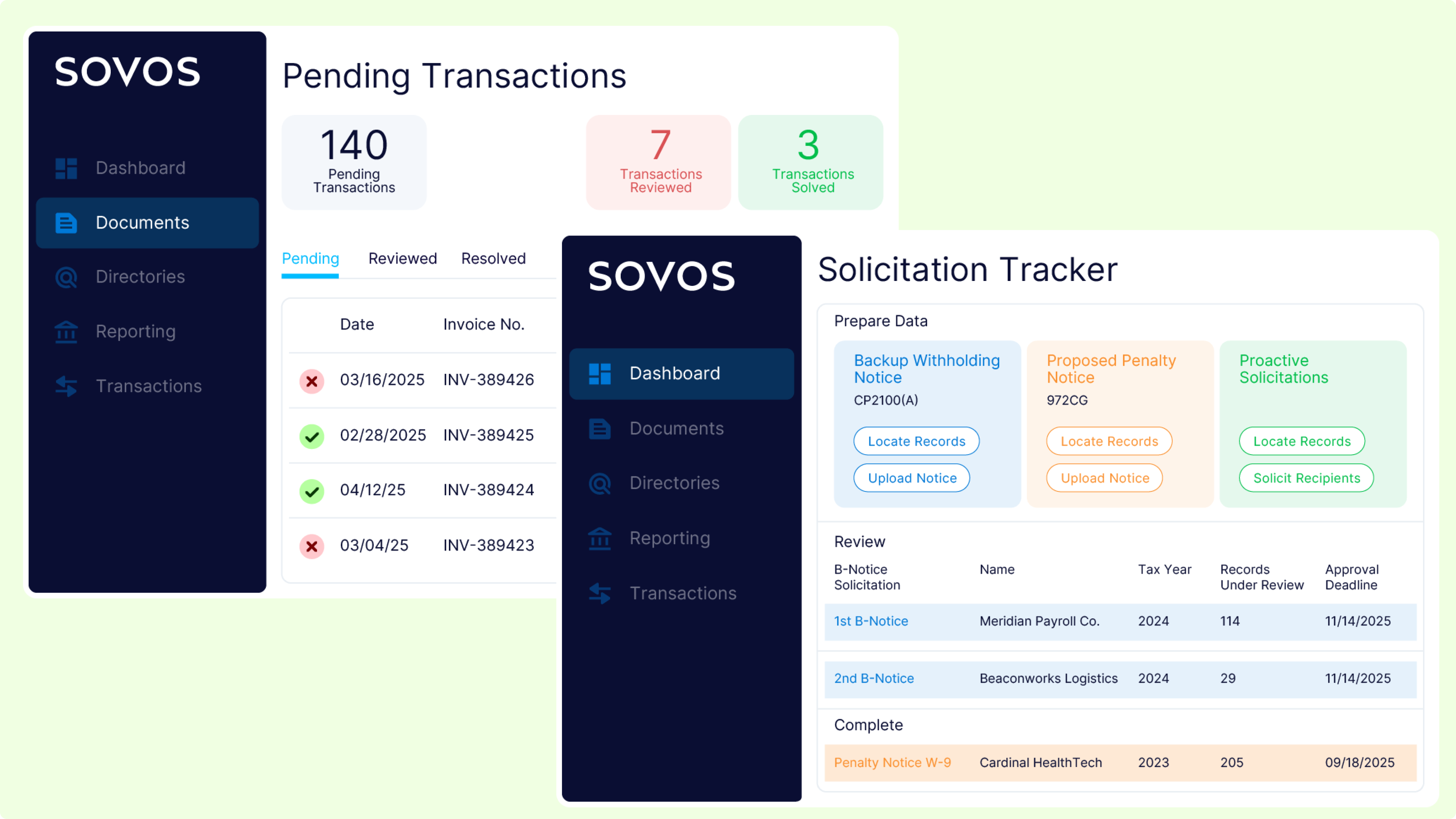
Sovos is an enterprise tax compliance suite. It covers sales and use tax, VAT, GST, filing, and e-invoicing.
Best for: Large companies with an ERP, a tax team, and audit exposure.
Compliance model: Tax engine. You stay the seller of record and run compliance through Sovos products.
Coverage: US sales and use tax, plus global VAT and GST. E-invoicing covers 65+ countries.
Subscription billing handling: Tax is calculated through your ERP. The fit depends on how your billing system feeds it.
Nexus monitoring: Not listed. Confirm with Sovos. Its public materials focus on determination, filing, and e-invoicing.
Integrations: SAP, Oracle, NetSuite, and other major ERP systems.
B2B exemption certificates: Exemption certificate management is part of the suite.
Pricing: Custom, based on your company and needs.
Limitations: Sovos is heavy for an early-stage or US-only SaaS company. Expect an enterprise-style rollout and plan for in-house tax staff.
5. Fonoa
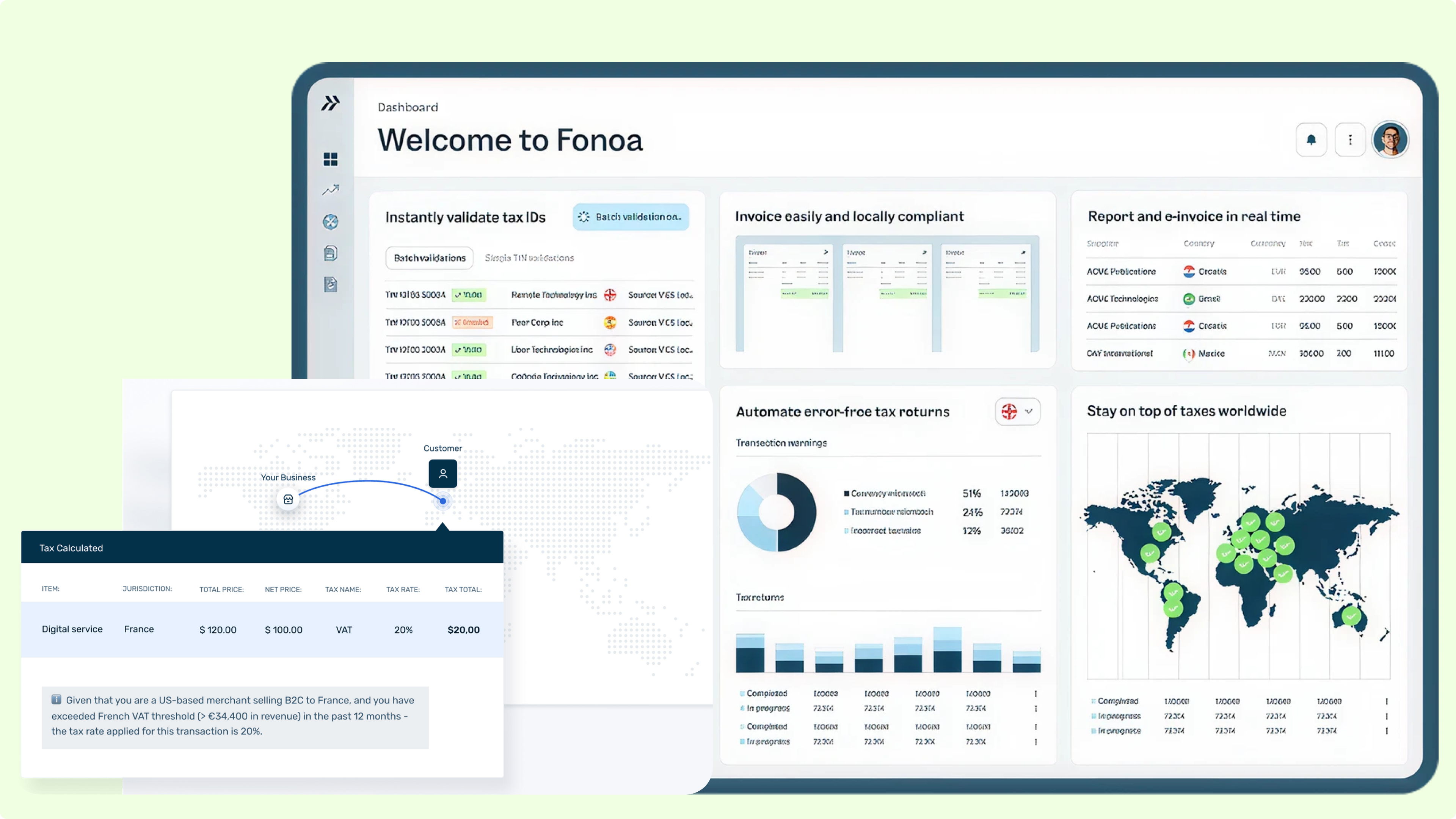
Fonoa is an API-first platform for global indirect tax. Its four core products cover tax ID validation, tax calculation, e-invoicing, and returns.
Best for: High-volume digital platforms and marketplaces with most of their sales outside the US.
Compliance model: Tax engine. You stay the seller of record.
Coverage: The tax engine covers 190+ jurisdictions. Tax ID lookup covers 120+ countries. E-invoicing covers 50+ countries.
Subscription billing handling: You connect your own billing system through the API.
Nexus monitoring: Confirm with Fonoa. It isn't one of the four core products.
Integrations: API-first. It's built to plug into your own stack.
B2B exemption certificates: Real-time tax ID validation supports the reverse charge on B2B sales.
Pricing: Not published.
Limitations: You need developers to build on the API. Registration isn't one of its four core products.
6. Paddle
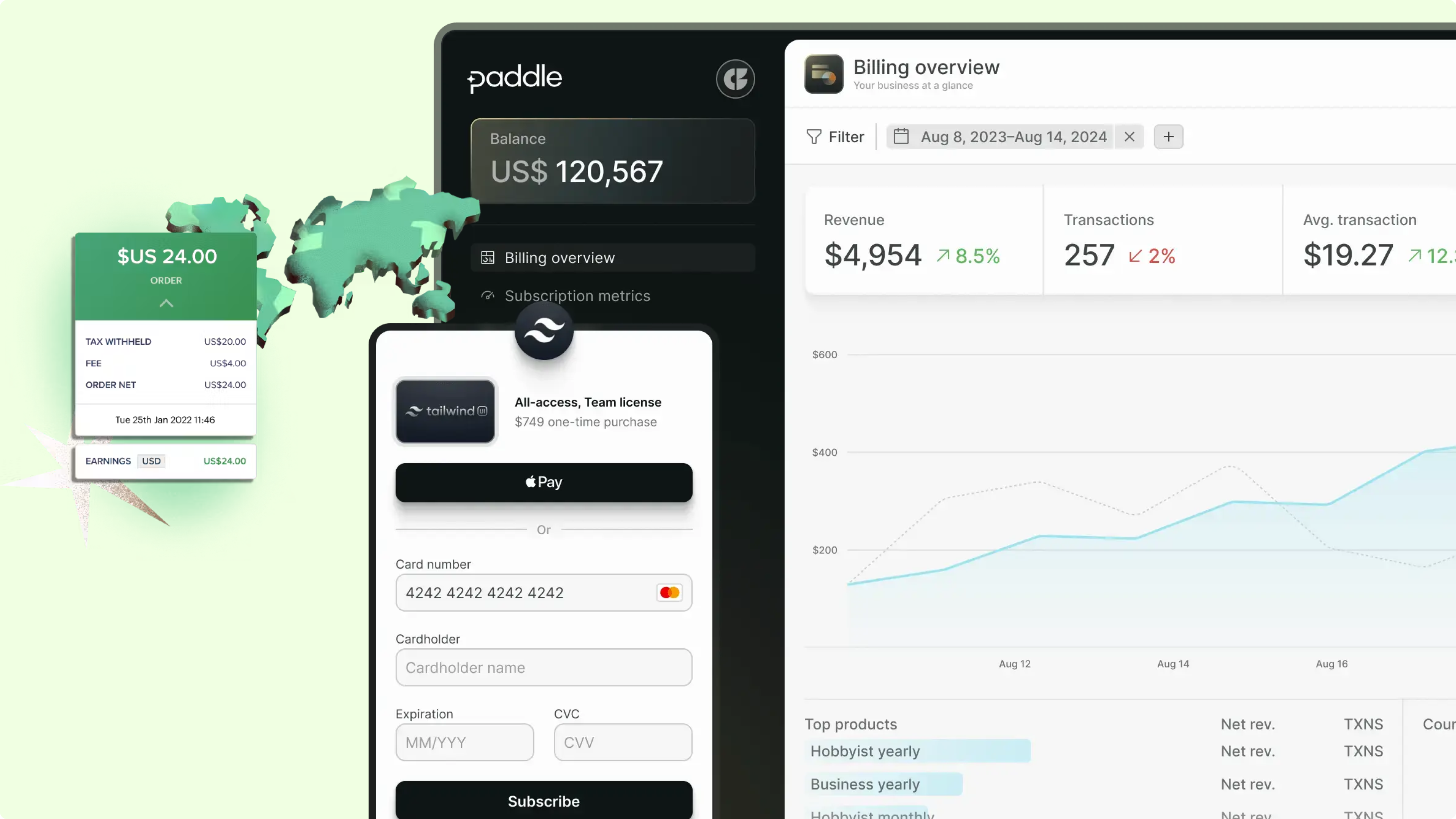
Paddle is a merchant of record for SaaS and digital goods. It bundles checkout, payments, subscription billing, and tax into one product.
Best for: Early-stage teams with no billing infrastructure that want one layer.
Compliance model: Merchant of record. Paddle is the legal seller and carries the tax obligation.
Coverage: Paddle registers, charges, files, and remits tax in 100+ jurisdictions.
Subscription billing handling: Built in. You use Paddle's subscriptions and checkout.
Nexus monitoring: Not your job. Paddle tracks its own obligations as the seller.
Integrations: Paddle's own checkout and billing, plus an API.
B2B exemption certificates: Paddle handles business tax details at checkout as the seller.
Pricing: 5% + 50¢ per checkout transaction. Custom pricing is available at high volume.
Limitations: The fee is a share of revenue, so it grows as you do. Paddle, not you, is the legal seller on each sale. Invoicing is an additional service.
Which SaaS Tax Solution Fits Your Business?
The SaaS tax solution that fits your business depends on your billing stack first, where you sell second, and your stage third. Work through the checks below in order.
Start With Your Billing Stack
Your billing stack narrows the list fastest.
- Already on Stripe with simple plans? Start with Stripe Tax.
- Running subscription or usage-based billing in a dedicated billing system like Chargebee? Choose Sphere.
- No billing infrastructure yet and want one layer? Consider Paddle.
- No internal tax owner, whatever your stack? Look at TaxValet.
It's important to note that a vendor only works if it connects to your billing system or ERP. That's true for every vendor, Sphere included. Check the integration list before anything else.
Then Look at Where You Sell
Where you sell decides which tax types matter most.
- US-only and multi-state: Prioritize state registration and filing depth. Choose Sphere.
- Mostly international: Prioritize VAT, GST, and digital services taxes (DST). Choose Fonoa or Sphere.
- Selling both directions: Choose Sphere, or Sphere plus Fonoa.
Match the Solution to Your Stage
Your growth stage decides how much tool you need.
- Pre-revenue to early traction: A bookkeeping tool plus a CPA is enough. Add indirect tax software only when a nexus threshold, a remote hire, or an international sale triggers an obligation.
- Scaling with multiple state registrations: Buy a platform with registration and filing included. Go with Sphere.
- Enterprise with an ERP and audit exposure: Enterprise level businesses generally need the scale of a solution like Sovos.
This is rarely a one-and-done choice. At Sphere, we constantly see companies switch vendors when a renewal comes up, a billing system changes, or coverage doesn't reach a new country. Consider your growth plans before choosing a vendor.
Will You Outgrow a Merchant of Record?
You will likely outgrow a merchant of record when one of three signals shows up:
- Revenue-share costs are higher than a platform fee would be.
- Enterprise buyers demand direct contracts and invoicing.
- Finance wants control of pricing and dunning.
When you move, you take back the seller-of-record role. You must register and file in every jurisdiction the merchant of record used to cover. Old transactions and new ones get reported by different parties. Subscriptions and payment methods have to be set up again. Treat it like a complete billing migration.
Already Selling Without Collecting Tax?
If you're already selling without collecting tax, assess the problem first and buy the tool second. Follow these six steps:
- Step 1: Pull your revenue by state and country for every prior period. Flag where you likely crossed a threshold.
- Step 2: Check whether your product is a taxable service in each flagged jurisdiction. Don't assume exposure exists until you do your homework.
- Step 3: Assess the exposure. That means uncollected tax, plus interest, plus penalties.
- Step 4: Choose a path. A voluntary disclosure agreement (VDA) lets you negotiate a limited lookback and penalty relief. Forward-only registration is faster, but it leaves past periods open for potential liability.
- Step 5: Decide who does the work. Managed services and purpose-built platforms support backfiling and disclosure programs. Self-serve calculation engines start from your go-live date only.
- Step 6: Document everything. Registration records and filing history are what investors and acquirers ask for in due diligence.
It's important to note that registering for sales tax permits can invite questions about prior periods. Assess the exposure, pick a fix, then buy the tool that can carry that fix out.
How SaaS Is Taxed in the US and Abroad
SaaS is taxed differently in every US state and under separate VAT and GST systems abroad. There is no single rule.
In the US, states classify SaaS as software, a digital service, or a nontaxable service. Some states tax it only for business use. The most common economic nexus threshold is $100,000 in sales. New York requires both $500,000 in sales and more than 100 transactions. Doing the math by hand stops working past a handful of states. And when a seller doesn't collect sales tax, the buyer usually owes use tax instead.
Outside the US, countries that tax digital goods and services each set their own rules:
- The EU has a €10,000 yearly threshold for cross-border sales of electronically supplied services. It only applies to sellers based in the EU. A US seller owes VAT from the first consumer sale.
- EU countries can set a small-business VAT threshold for domestic sales. It is capped at €85,000.
- GST regimes and digital services taxes add their own registration rules. A global seller manages several regimes at once.
- B2B sales in many regions shift the tax to the buyer through the reverse charge mechanism. You need the buyer's tax ID or exemption certificate as proof.
Frequently asked questions

Ready to handle every SaaS tax obligation in one platform?
Schedule a demo with Sphere today